The Leviticus 25 Plan

Featured

“He who will not apply new remedies must expect new evils.” – Sir Francis Bacon

The Leviticus 25 Plan is a dynamic economic initiative providing direct liquidity benefits for American families, while at the same time scaling back the role of government in managing and controlling the affairs of citizens.  It is a comprehensive plan with long-term economic and social benefits for citizens and government.

The inspiration for this plan is based upon Biblical principles set forth in the Book of Leviticus, principles tendering direct economic liberties to the people.

The Leviticus 25 Plan – An Economic Acceleration Plan for America

Leviticus 25 Plan 2027 (52114 downloads )

____________________________________________________

May 2026 quote:  “A society that puts equality — in the sense of equality of outcome — ahead of freedom will end up with neither equality nor freedom. The use of force to achieve equality will destroy freedom, and the force, introduced for good purposes, will end up in the hands of people who use it to promote their own interests.
On the other hand, a society that puts freedom first will, as a happy by-product, end up with both greater freedom and greater equality.  Though a by-product of freedom, greater equality is not an accident.  A free society releases the energies and abilities of people to pursue their own objectives.”  – Milton Friedman, 1976 Nobel Prize, Economic Sciences


The Impossible Dream: Federal Budget Surpluses, Citizen-Centered Healthcare, Financial Security for Millions of American Families. The Leviticus 25 Plan.

Washington-based Democrats and Republicans have a long-standing record of growing government, creating greater dependence on government among the citizenry, dreaming up new spending programs riddled with inefficiencies, waste and outright fraud. 

Washington political policy initiatives over the past two decades have impoverished millions of Americans, created record Household Debt burdens, stymied economic growth, and generated soaring, nightmarish federal budget deficits, massive enough to now constitute a national security issue.

Now imagine a future America where millions of U.S. citizens were to be granted equal access to direct liquidity extensions to those which were so generously provided to major Wall Street financial institutions during the great financial crisis (2007-2010) and the Covid economic crisis (2020-2022), including: Morgan Stanley, Citigroup, Bank of America, State Street Corp, Goldman Sachs, Merrill Lynch, JPMorgan Chase, Wachovia, Lehman Brothers, Wells Fargo, Bear Stearns) and major foreign financial institutions (Royal Bank of Scotland, UBS AG, Deutsche Bank AG, Barclays, Credit Suisse. Dexia, BNP Paribas).

Imagine a future America where millions of hard-working, tax-paying U.S. citizens have eliminated massive sums of mortgage debt, paid off auto loans and installment debt, paid off student loans (or were fully reimbursed for previously paid off student loans), and are able to improve their current quality of life and save considerable sums of money toward future plans and dreams. 

Imagine a future America where millions of ‘below-the-poverty-line’ families did not need ongoing government support to cover life’s basic necessities (food, housing, and primary health care expenditures). 

Imagine a future where families did not need two incomes, or additional government assistance to barely cover family-specific expenses like child-care, private education, and federal, state, and local tax burdens.

And now visualize a future America where government spending has dropped precipitously, tax revenues have risen dramatically (without raising taxes), federal (and state) budget surpluses have become an ongoing reality. 

America’s economy – surging into a new, long-term, revitalized, free market growth cycle.

And citizen-centered healthcare largely replacing the current big government / big corporation market-dominating partnerships.

That future is here.

The Leviticus 25 Plan – loaded up and ready to launch.

…………………..

The Leviticus 25 Plan is a dynamic economic initiative providing direct liquidity benefits for American families, while at the same time scaling back the role of government in managing and controlling the affairs of citizens.  It is a comprehensive plan with long-term economic and social benefits for citizens and government.

The inspiration for this plan is based upon Biblical principles set forth in the Book of Leviticus, principles tendering direct economic liberties to the people.

The Leviticus 25 Plan – An Economic Acceleration Plan for America

$95,000 per U.S. citizen – Leviticus 25 Plan 2027 (52104 downloads )

F.A. Hayek – “Individualism”

Individualism, in contrast to socialism and all other forms of totalitarianism, is based on the respect of Christianity for the individual man and the belief that it is desirable that men should be free to develop their own individual gifts and bents. This philosophy, first fully developed during the Renaissance, grew and spread into what we know as Western civilization. The general direction of social development was one of freeing the individual from the ties which bound him in feudal society.”  -F.A. Hayek, Nobel Prize, Economic Sciences

America’s Financial Woes – A Perfect Opening for ‘Quantitative Re-targeting” (QR)…

Headlines…

US Businesses Are Going Bankrupt At An Absolutely Blistering Pace

Our society is changing at a pace that is difficult to comprehend…  DEC 5, 2025

……….

Small Business Job Losses Soar In November; ADP

That is the biggest monthly job loss since March 2023DEC 3, 2023

……………

Food Banks All Over The US Are Being Overwhelmed By A Tsunami Of Hungry People …experiencing a dramatic spike in demand “long before the shutdown ever happened”…  NOV 7, 2025

……………

Stagnation …

Also note: lower GDP growth means lower Treasury receipts, lower payroll tax revenues and more stress on the Medicare and Social Security Trust Funds…

………………..

Federal Reserve’s latest consumer credit report (G.19):

Finally… banks continue to bleed US consumers dry: at the start of 2025 the average rate on credit card accounts was 22.80%… and on Sept 30 the number was higher at 22.83%, just barely below the all time high of 23.37% set one year ago.

_____________________________________

The Leviticus 25 Plan solution

Quantitative Easing (QE) is a Fed monetary tool used to restore liquidity in a troubled banking system, as when banks fall below their capital requirements through practices like loading up balance sheets with sewage-grade subprime debt delivered up the line from the mortgage broker casino system, aided and abetted by fake AAA credit ratings on their bundled security packages, topped off with gross incompetence / ignorance in properly assessing counter-party risk in their hedging strategies.

The Great Financial crisis (2007–2009) which followed “created the largest economic upheaval in the United States since the Great Depression of the 1930s… At eighteen months, from December 2007 to June 2009, it exceeded the sixteen-month recessions of 1973–1975 and 1981–1982; the average period from peak to trough of post–World War II recessions was 11.1 months… both GDP and number of jobs declined by about 6 percent and median family incomes declined by about 8 percent. The Great Recession was particularly worthy of its name because of the protracted slump in employment that followed even after the recession was officially over, as assessed on the basis of the dating procedure of the National Bureau of Economic Research.1

By some estimates, over 30 million working Americans lost their jobs; over 3.8 million families lost their homes.

QE has done nothing to reduce public and private debt, or restore financial security for millions of American families or strengthen our country’s economic system.

It is now time for a major reset involving a Fed-Treasury Quantitative Re-targeting (QR) facility – with direct liquidity flows to all of America’s hard-working, tax-paying U.S. citizens who qualify and wish to participate.

The Leviticus 25 Plan is a dynamic economic initiative providing direct liquidity benefits for American families, while at the same time scaling back the role of government in managing and controlling the affairs of citizens.  It is a comprehensive plan with long-term economic and social benefits for citizens and government.

The inspiration for this plan is based upon Biblical principles set forth in the Book of Leviticus, principles tendering direct economic liberties to the people.

The Leviticus 25 Plan – An Economic Acceleration Plan for America

$95,000 per U.S. citizen – Leviticus 25 Plan 2027 (52102 downloads )

Reminder: List of Biden Tax Hikes that Kicked In Jan 1, 2023

A look back…

Here’s A List Of Biden Tax Hikes Which Take Effect Jan. 1

ZeroHedge, Dec 31, 2022 – Excerpts:

When the Democrats finally passed the “Inflation Reduction Act” in 2022 (how’s that going?), they included several tax hikes set to take effect on Jan. 1, 2023.

Americans for Tax reform‘s Mike Palicz has conveniently compiled a list of them, along with his take on their intended effects:

$6.5 Billion Natural Gas Tax Which Will Increase Household Energy Bills   

Think your household energy bills are high now? Just wait until the three major energy taxes in the Inflation Reduction Act hit your wallet. The first is a regressive tax on American oil and gas development. The tax will drive up the cost of household energy bills. The Congressional Budget Office estimates the natural gas tax will increase taxes by $6.5 billion.

And of course, this tax hike violates Biden’s pledge not to raise taxes on Americans making under $400,000 per year. According to the American Gas Association, the methane tax will slap a 17% increase on the average family’s natural gas bill.

$12 Billion Crude Oil Tax Which Will Increase Household Costs

Next up – a .16c/barrel tax on crude oil and imported petroleum products which will end up on the shoulders of consumers in the form of higher tax prices.

The tax hike violates President Biden’s tax pledge to any American making less than $400,000 per year.

As noted above, Biden administration officials have repeatedly admitted taxes that raise consumer energy prices are in violation of President Biden’s $400,000 tax pledge.

As if it weren’t bad enough, Democrats have pegged their oil tax increase to inflation. As inflation increases, so will the level of tax.

$1.2 Billion Coal Tax Which Will Increase Household Energy Bills

This one increases the current tax rate on coal from $0.50 to $1.10 per ton, while coal from surface mining would increase from $0.25 per to to $0.55 per ton, which will raise $1.2 billion per year in taxes that will undoubtedly be passed along to consumers in the form of higher energy bills.

$74 Billion Stock Tax Which Will Hit Your Nest Egg — 401(k)s, IRAs and Pension Plans

Democrats are now imposing a new federal excise tax when Americans sell shares of a stock back to a company.

Raising taxes and restricting stock buybacks harms the retirement savings of any individual with a 401(k), IRA or pension plan.

Union retirement plans will also be hit.

The tax will put U.S. employers at a competitive disadvantage with China, which does not have such a tax.

Stock buybacks help grow retirement accounts. Raising taxes and restricting buybacks would harm the 58 percent of Americans who own stock and more than 60 million workers invested in a 401(k). An additional 14.83 million Americans are invested in 529 education savings accounts.

Retirement accounts hold the largest share of corporate stocks, accounting for roughly 37 percent of the outstanding $22.8 trillion in U.S. corporate stock, according to the Tax Foundation.

In 2017, corporate-sponsored funds made up $4.45 trillion in market value; union-sponsored funds accounted for $409 billion; and public-sponsored funds, which benefit teachers and police officers, added up to $4.25 trillion.

A tax on buybacks could dissuade companies from doing so, and US companies will face significant compliance costs, which will – again, be passed along to consumers.

$225 Billion Corporate Income Tax Hike Which Will Be Passed on to Households

American businesses reporting at least $1 billion in profits over the past three years will now face a 15% corporate alternative minimum tax, which will be passed along in the form of higher prices, fewer jobs and lower wages, according to Americans for Tax Reform.

Tax Foundation report from last December found a 15 percent book tax would reduce GDP by 0.1 percent and kill 27,000 jobs.

Preliminary cost estimates from the Congressional Budget Office found the provision would increase taxes by more than $225 billion.

According to JCT’s analysis, 49.7 percent of the tax would be borne by the manufacturing industry at a time when manufacturers are already struggling with supply-chain disruptions.

Which industry will likely be most affected? According to the Tax Foundation, “the coal industry faces the heaviest burden of the book minimum tax, facing a net tax hike of 7.2 percent of its pretax book income, followed by automobile and truck manufacturing, which faces a 5.1 percent tax hike.”

_________________________________ 

Main Street America Republicans have the one and only plan in America with the power to monumentally shrink the big government footprint that is strangling U.S. economic growth

The Leviticus 25 Plan is a dynamic economic initiative providing direct liquidity benefits for American families, while at the same time scaling back the role of government in managing and controlling the affairs of citizens.  It is a comprehensive plan with long-term economic and social benefits for citizens and government.

The inspiration for this plan is based upon Biblical principles set forth in the Book of Leviticus, principles tendering direct economic liberties to the people.

The Leviticus 25 Plan – An Economic Acceleration Plan for America

$95,000 per U.S. citizen – Leviticus 25 Plan 2027 (52031 downloads )

Property Tax Rebellion Now Boiling Over in America. One Dynamic Plan Provides Everything Needed to Solve This Crisis and Get America Back on Track…

The property tax relief plans named in the story below center around shifting tax burdens and squeezing already strained budgets, but do nothing to alleviate overall tax burdens for citizens and businesses.

They do nothing to reverse overall massive state and local budget deficits.

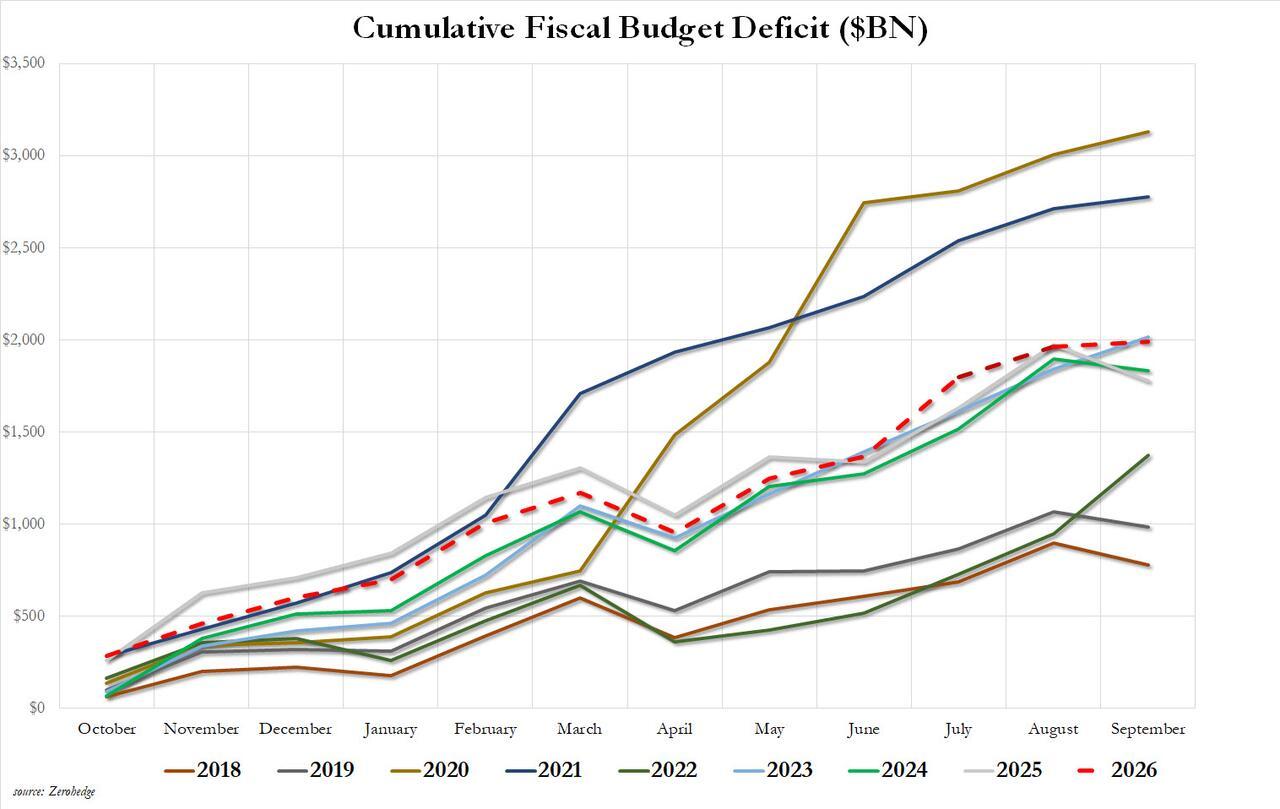
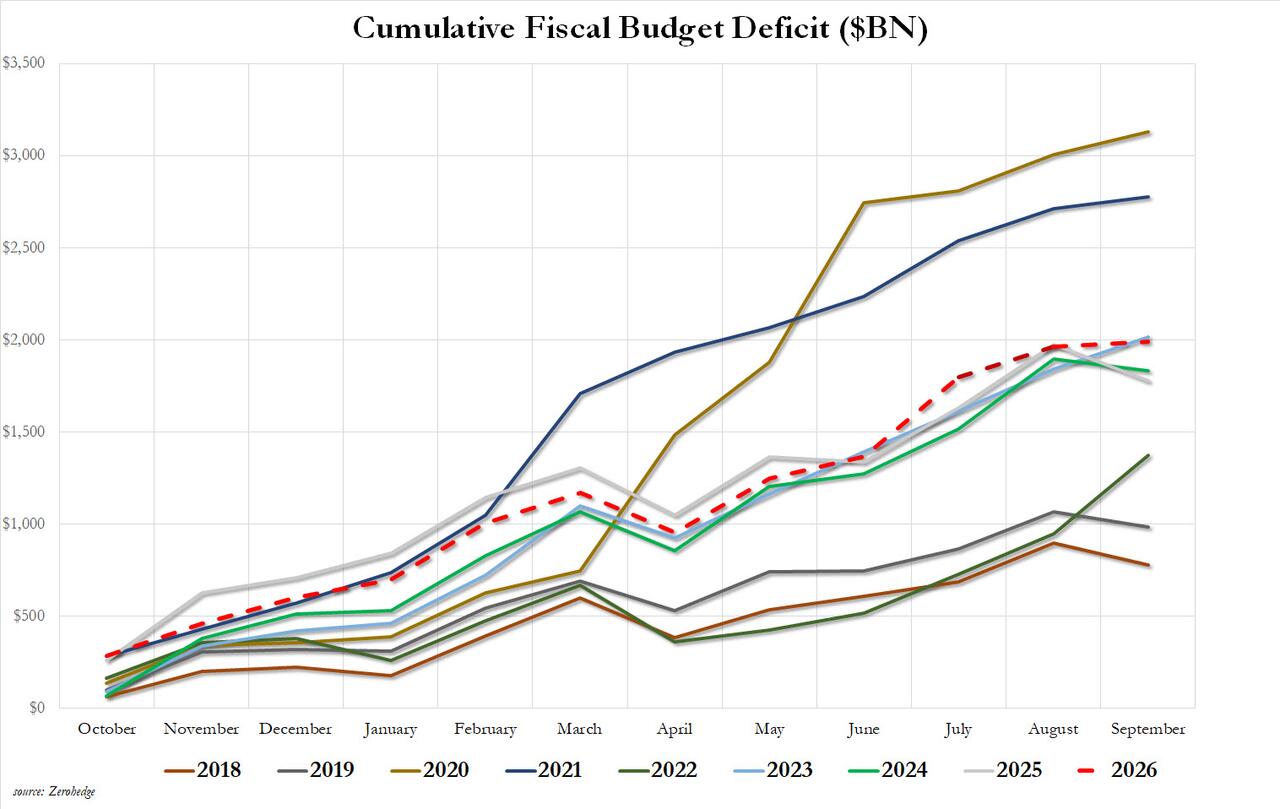
They do nothing to eliminate federal budget deficits – projected by the Congressional Budget Office (CB) to grow from $1.9 trillion in 2026 to $3.1 trillion by 2036 – and generate a powerful new flow of federal budget surpluses.

Finally, the strategies named below will do nothing to lift people up out of poverty, eliminate massive amounts of Household Debt, and restore financial security for millions of America’s hard-working, tax-paying U.S. citizens.

Meet the one plan in America that will resolve these critical issues: The Leviticus 25 Plan

………………………………………

A Property Tax Rebellion Is Emerging In America

ZeroHedge, May 04, 2026 – Authored by Aaron Gifford via The Epoch Times,

Excerpts:

If 413,000 residents throughout the Buckeye State sign a petition before July 1, a public vote to eliminate local property taxes will appear on the November ballot.

If the signature count falls short, whatever is collected can be applied the following year, or however long it takes, said Blackmarr, media coordinator and a main volunteer for the 3,000-plus member Citizens for Property Tax Reform group.

“We are really hurting in Ohio,” she told The Epoch Times. “People never thought they’d be in this situation.”

Ohio isn’t alone. Forty-six states and the District of Columbia already have limits on annual local property tax levy increases, and leaders in Florida and Texas are pursuing additional legislation to limit government “flexibility” in how it raises revenues, according to a September report from McKinsey and Co., a global management consulting firm whose clients include state and local governments.

Schools, already strapped for cash, hang in the balance. School districts struggle with declining student enrollment, unfunded mandates, state and federal aid loss largely due to skyrocketing Medicaid costs, and spiking employee health insurance costs.

On the local level, mayors and town boards face similar challenges as they try to continue providing public safety, utilities, and infrastructure services.

Fed-up homeowners say it’s high time to try another way to pay their community’s civil servants, perhaps through higher sales tax or state income tax rates, along with slashing administrative bloat in schools and city halls.

“Let the state find a way where 100 percent of the population pays for education,” Ron Shumate, one of Blackmarr’s volunteers from suburban Cincinnati, told The Epoch Times. “They give profit-making businesses a break, but not us.”…

Across States and Communities

In Massachusetts, a citizens group in Great Barrington, near Springfield, wants to shift more of the costs for schools and local infrastructure to part-time residents who own vacation homes. If All Band Together gets its way, the current annual property tax on a full-time residence assessed at $200,000, for example, would decrease by $1,293, while the amount for a seasonal home with the same assessment would increase by $356, according to the group’s website.

In Minnesota and North Dakota, Republican lawmakers have proposed a cap on property tax increases based on the rate of inflation and population growth. If the rate of inflation is 3 percent and the population of a community grows by 1 percent, for example, then the increase cap for the taxing entity would be 3.5 percent. Overriding the cap would require voter approval.

John Phelan, an economist for Minnesota-based Center of the American Experiment, which wrote the model legislation for both states, said the proposal was prompted by property tax hikes last year of between 8 percent and 9.5 percent in some counties. School boards decide on annual district operating budgets and subsequent tax levies; voters only have a say on major expenditures beyond personnel and fixed costs, such as the creation of a multimillion-dollar technology fund.

“The burden shouldn’t be driven by asset values,” Phelan told The Epoch Times. “If [school districts] want to spend more money, they should get permission from the population.”

In Montana, Republican state lawmakers are pursuing a 2 percent cap on property tax hikes for local government funding, but not for schools, which consume about 55 percent of property tax revenues.

Kendall Cotton, president and CEO of the Frontier Institute research and policy center, called the legislation a good start, but said more relief is needed, as home appraisals in growing communities increased by 60 percent this year, resulting in double-digit property tax hikes….

“These big jumps put a lot of pressure on the system, but governments have not been responding in kind,” Cotton told The Epoch Times.

“Misplaced priorities,” he said. “People are really being taxed out of their homes. We are just renting from the government.”

Members of Nebraska’s Epic Option citizen group, like their peers in Ohio, are collecting signatures for a ballot initiative to eliminate property taxes. They paused their efforts to obtain the required 160,000 signatures this year and instead will focus on 2028, according to the group’s website….

Texas Gov. Greg Abbott suggested eliminating school property taxes, and Florida state lawmakers have proposed ending local government property taxes but not school taxes.

A bill in the Georgia state legislature calls for phasing out property taxes and increasing the sales tax. A similar bill was introduced in Pennsylvania. Various property tax reform measures have been proposed in Idaho, Illinois, Indiana, Iowa, Kansas, Oklahoma, South Dakota, and Wyoming, according to their respective state legislature websites.

School Budget Woes

More than one-third of U.S. public school funding comes from local property taxes, while the remainder is provided by state and federal aid, as well as municipal and state sales taxes, according to the National Center for Education Statistics. Some states also apply lottery and gambling revenues.

All told, K–12 spending across the country now exceeds $1 trillion, the Edunomics Lab at Georgetown University reported on April 23.

It also said public per-student spending ranges from about $11,000 in Idaho to more than $31,887 in the District of Columbia. Staffing and school tax rates continue to increase in most districts, while student enrollment decreases.

Typical state and federal aid formulas are based on enrollment, so districts must either cut costs or raise local taxes to offset the decreasing amount of per-student aid. The dependence on $189 billion in federal COVID-19 pandemic relief money, which prompted massive hiring sprees but is now exhausted, has exacerbated the financial crisis in many districts that serve low-income communities with large populations of special needs students…

Nationally, public K–12 enrollment decreased by about 900,500 students in the past decade, while staffing during the same time period increased by about 700,000, or 11.9 percent, according to the Edunomics Lab. The organization also reported planned school layoffs or staff reductions this year in Boston; Cleveland; Milwaukee; Las Vegas; Los Angeles; San Diego; San Francisco; Fresno, California; Richmond, Virginia; Tulsa, Oklahoma; Toledo, Ohio; Anchorage, Alaska; Cedar Rapids, Iowa;  Fort Lauderdale, Florida;  and “countless small and mid-sized districts.”

“This isn’t temporary,” the Edunomics Lab said in an email to The Epoch Times. “It’s a reset.”….

“The American dream is to own a home, work for at least 30 years, pay it off, retire 10 years later, and be comfortable,” … “If you’re relying on Social Security, that won’t happen.”

“People are tired of being taxed to death and seeing the money stolen,”

Full article: https://www.zerohedge.com/personal-finance/property-tax-rebellion-emerging-america

____________________________________

The Leviticus 25 Plan will generate massive new tax revenue flows and reduce budget outlays on a broad scale – for federal, state, and local government agencies.

It does not ‘shift’ tax burdens. It eliminates tax burdens.

The Leviticus 25 Plan will give rise to the type of robust fiscal environment for state and local governments that will allow for property tax reductions beyond anything dreamed of in current, ongoing tax reduction discussions.

Teachers, faculty, administrators, support staff in America’s K-12 public and private schools and America’s higher education institutions who choose to participate will benefit enormously by the direct liquidity benefits of The Plan.

The Leviticus 25 Plan will generate $37.303 billion budget surpluses during each of its first five years of activation (2027-2031) – conservative economic scoring analysis – and pay for itself entirely over the succeeding 10-15 year period.

Finally, it will lift people up out of poverty, eliminate massive amounts of Household Debt, and restore financial security for millions of America’s hard-working, tax-paying U.S. citizens.

The Leviticus 25 Plan is a dynamic economic initiative providing direct liquidity benefits for American families, while at the same time scaling back the role of government in managing and controlling the affairs of citizens.  It is a comprehensive plan with long-term economic and social benefits for citizens and government.

The inspiration for this plan is based upon Biblical principles set forth in the Book of Leviticus, principles tendering direct economic liberties to the people.

The Leviticus 25 Plan – An Economic Acceleration Plan for America

$95,000 per U.S. citizen – Leviticus 25 Plan 2027 (51641 downloads )

The Leviticus 25 Plan – Dynamic Fiscal Recharge for Federal, State Governments

Updated scoring model on the most powerful economic acceleration plan in the world.

The Leviticus 25 Plan will generate average annual budget surpluses of $37.303 billion vs current CBO-projected average annual deficits of $1.982 trillion – over each of the first five years of activation (2027-2031).

This represents a monumental $2.019 trillion positive budget gain annually (2027-2031) for the U.S. federal budget. It is a virtual certainty that this projection significantly understates the true budget gains that will emerge, since it does not factor the following chain-reaction outcomes:
1) The significant numbers of participants who will no longer qualify for Medicaid;
2) The increased savings from fraud detection/prevention following the elimination of billions of healthcare-related claims flooding the system;
3) The increased savings from the excessive numbers of “improper payment” errors plaguing the system.

Outsized fiscal gains will also accrue to state and local governments, resulting from general tax revenue / payroll tax gains (revitalized economic growth), and from what will end up being remarkably large across-the-board spending reductions:
1) Medicaid spending outlays ($7,000 annual deductibles, enrollee asset limitation restrictions);
2) social welfare outlays (SNAP, heating assistance, rental assistance, TANF);
3) increased savings from fraud detection/prevention, resulting from the elimination of millions of healthcare-related claims flooding the system;
4) the elimination of major state tax deductions (e.g. elimination of interest expense deductions participants pay off home mortgages / HELOCs).

This extraordinary fiscal turn-around will set the stage for state and local governments to effect major property tax cuts, along with business-related and sales tax rollbacks.

…………………….

Primary Recapture Gains – Updated Scoring Summary:

The Leviticus 25 Plan budget surplus totals (2027-2031):

CBO projected deficit summary (2027-2031):$9.909 trillion

Recapture gains (2027-2031):
Federal Income Tax recapture benefit: $1.366 trillion
Safety Net Program recapture benefit: $3.224 trillion
Medicaid/CHIP $7,000 deductible recapture $2.335 trillion
Medicare $7,000 deductible recapture:$2.152 trillion
VA $7,000 deductible recapture:$257.6 billion
TRICARE $7,000 deductible recapture: $263.2 billion
FEHB $7,000 deductible recapture: $229.6 billion
SSDI recapture:$658.7 billion
Interest expense recapture: $128.817 billion

Totals – 2027-2031:
5-year projected deficit (CBO): $9.909 trillion
5-year projected recapture (subtotal): $10.486 trillion
5-year projected interest expense savings: $128.817 billion

Budget surplus (projected) 2027-2031 – before interest expense savings:
$10.486 trillion – $9.909 trillion = $57.7 billion

Budget surplus (projected) 2027-2031 – including interest expense savings:
$57.7 billion + $128.817 billion = $186.517 billion

Average annual budget surplus (projected) 2027-2031:
$186.517 billion / 5 years:$37.303 billion per year

…………………….

Summary Details:

* The Leviticus 25 Plan 2027 Generates $37.303 Billion Federal Budget Surpluses Annually (2027-2031). Part 1: Overview, Deficit Projections (CBO)

* The Leviticus 25 Plan Generates $37.303 Billion Federal Budget Surpluses Annually (2027-2031). Part 2: Federal Income Tax Recapture; Economic Security / Means-Tested Welfare Recapture.

* The Leviticus 25 Plan Generates $37.303 Billion Federal Budget Surpluses Annually (2027-2031). Part 3: Medicaid, Medicare, VA, TRICARE, FEHB, SSDI Recapture

* The Leviticus 25 Plan Generates $37.303 Billion Federal Budget Surpluses Annually (2027-2031). Part 4: Interest Expense Recapture

* The Leviticus 25 Plan Generates $37.303 Billion Federal Budget Surpluses Annually (2027-2031). Part 5: Economic Scoring – Summary Totals

……………………………………………………..

Note 1: Projected budget surpluses for 2027-2031 do not factor in the additional government tax revenue gains that would accrue from the massive shift in capital away from debt service and into productive economic activity.
Note 2: Projected budget surpluses for 2027-2031 do not factor in the additional government tax revenue gains that would accrue from significantly lower levels of debt deductibility on individual income tax filings.
Note 3: Projected budget surpluses from the Medicaid / CHIP recapture do not take into account the likelihood of fewer citizens actually qualifying for Medicaid / CHIP benefits.
Note 4: Projected budget surpluses from Interest Expense Reductions during each of the first five years of activation (2027-2031) is likely understated due to the fact that ‘debt held by the public’ is projected to increase by 8.5% per year, from $28.278 trillion in 2026 to $40.198 trillion in 2030.
Note 5: The Plan’s funding of individual Medical Savings Accounts (MSAs) with the $7,000 deductible provision per year would result in an enormous drop in the number of claims each year for Medicare reimbursement. Medicare payroll taxes would generate a growing revenue stream, due to stronger economic growth, while outlays would drop significantly from the reduced claims numbers – thereby providing the Fed with a powerful tool to recapitalize the Medicare Trust Fund via the U.S. Citizen’s Credit Facility.

____________________________

The Leviticus 25 Plan – An Economic Acceleration Plan for America

$95,000 per U.S. citizen – Leviticus 25 Plan 2027 (51044 downloads )

The Leviticus 25 Plan – Economic Dynamics for Main Street America (2027-2031)

Overview – “Consumer expenditures on interest payments represent a significant portion of household budgets, exceeding $1.1 trillion last quarter. These payments, covering non-mortgage debt like credit cards and auto loans, have risen significantly due to higher interest rates aimed at combating inflation, according to data from the U.S. Bureau of Economic Analysis (BEA).”

………………………………………….

US Mortgage Statistics 2026: Debt, Delinquency and Foreclosure Data

Written by  Maggie Davis |  Edited by  Dan Shepard  |  Updated Mar 25, 2026

Americans collectively owe $13.17 trillion in mortgage debt, accounting for 70.1% of total U.S. consumer debt. Just 0.92% of mortgage debt is seriously delinquent, indicating that most borrowers are keeping up with their payments.

…………………………………………..

Household Debt and Credit Developments in 2025Q41

Federal Reserve Bank of New York – Quarterly Report on Household Debt and Credit 2025:Q4

Total Household Debt now stands at $18.8 trillion.

Non-mortgage household debt rose $191 billion in 2025Q4 to $5.164 trillion.

Mortgage Balances
• Mortgage balances grew by $98 billion during Q4 2025, totaling $13.17 trillion at the end of December;
• Home equity lines of credit “outstanding HELOC balances,” up $12 billion, to $433 billion.

Non-housing Consumer Debt
• Non-housing consumer debt balances increased by $81 billion to $5.164 trillion;
• Credit card balances rose $44 billion during the fourth quarter, now totaling $1.28 trillion;
• Auto loan balances edged up by $12 billion to $1.66 trillion;
• Other balances, which include retail cards and consumer finance loans, rose $14 billion to $564 billion;
• Student loan balances increased $11 billion in the quarter – current total $1.66 trillion.

Delinquency & Public Records
Aggregate delinquency rates worsened slightly in the fourth quarter of 2025. As of the end of December, 4.8% of outstanding debt was in some stage of delinquency… Transition into early delinquency ticked up slightly for mortgages and more significantly for student loans, but held mostly steady for autos, credit cards, and HELOCs.

___________________________________

The Leviticus 25 Plan will, at a minimum, eliminate several trillion dollars in consumer non-mortgage debt and satisfy delinquent debt obligations and clear bankruptcy notices for over 200,000 consumers.

The Leviticus 25 Plan will also draw down / eliminate trillions of dollars in Home Mortgages and Home Equity Lines of Credit (HELOC), and clear the majority of loan delinquencies and foreclosure filings.

Shifting trillions of dollars from monthly debt service obligations into savings/investments and non-debt based economic growth will: 1) Generate massive new tax revenue flows and payroll tax gains for federal and state government; 2) Reinvigorate/rescue millions of struggling small businesses across America; 3) Restore financial security for millions of hard-working, tax-paying U.S. citizen families; 4) Provide the banking system with trillions of dollars in fresh cash reserves – with the potential of providing critical support for the U.S. Treasury market.

These economic dynamics add to The Leviticus 25 Plan‘s compelling fiscal dynamics, which on their own set the United States federal government on course for $37.303 billion budget surpluses during each of the first five years of activation (2027-2031), while vastly improving balance sheets of virtually all state/local government entities.

The Leviticus 25 Plan – the most powerful economic reset plan in the world. Loaded up and ready to launch.

The Leviticus 25 Plan – An Economic Acceleration Plan for America

$95,000 per U.S. citizen – Leviticus 25 Plan 2027 (50979 downloads )

Paulson Treasury Market Warning: “We need an emergency break-the-glass plan”

Is A “Vicious” Treasury Market Emergency At Our Doorstep?

ZeroHedge, Apr 19, 2026 –  Submitted by QTR’s Fringe Finance

Excerpts:

…When Henry Paulson steps back into the public conversation after years of relative silence, it’s not random timing. This is someone who sat at the center of the 2008 financial crisis and understands how quickly confidence can evaporate once stress begins to build in core markets….Paulson is explicitly warning that the scale of U.S. borrowing is now testing confidence in the Treasury market itself. With federal debt approaching $39 trillion, he points to the risk that the long-standing assumption of endless demand for U.S. government debt may no longer hold.

As he put it, “That’s a dangerous thing,” describing a scenario where foreign demand declines and Treasury prices fall. That is not a small shift in tone. The entire global financial system is built on the idea that Treasuries are the ultimate safe asset, and once that perception begins to weaken, the consequences cascade quickly.

What stands out even more is what he says next about how such a situation would resolve: “Should enough investors back out… the Federal Reserve would step in as a buyer of last resort.”

And as we all know, a “buyer of last resort” is simply another way of describing a return to large-scale intervention by the Federal Reserve. Whether policymakers call it stabilization, liquidity support, or something else (like the A.S.S.H.O.L.E.S. plan), the mechanism is the same: the central bank absorbs supply when the market no longer can. In other words, quantitative easing returns.

That leaves two realistic interpretations of why Paulson is speaking now.

  1. Either he sees early signs of stress already forming beneath the surface of the Treasury market—declining foreign participation, weakening liquidity, or rising yields that are no longer being absorbed smoothly.
  2. Or he is helping prepare the narrative for the policy response that will follow when those stresses become undeniable. Those two possibilities are not mutually exclusive. In fact, they often occur together.

His comments about needing an emergency response framework make that even clearer. He said, “We need an emergency break-the-glass plan… ready to go when we hit the wall,” and followed it with “It will be vicious.”

Notice he said when we hit the wall, not if.

That is not the language of a former official casually discussing long-term fiscal challenges. It is the language of someone who expects a disorderly adjustment and understands how quickly conditions can spiral once confidence breaks.

Markets already assume that after the next deleveraging cycle, central banks will return to QE. That part is widely understood. What is not fully appreciated is the implication if the stress originates inside the Treasury market itself. Treasuries are not just another asset class. They underpin global collateral systems, anchor borrowing costs across the economy, and support the U.S. dollar reserve currency status. If confidence in that market begins to erode, the feedback loop is far more severe than a typical recessionary downturn.

In that scenario, the Federal Reserve stepping in as the marginal buyer would not simply stabilize markets. It would fundamentally alter how capital allocates globally. Real yields could compress rapidly, confidence in fiat stability could weaken, and capital could rotate into hard assets at a pace that exceeds even aggressive expectations. The move would not just be cyclical, it would be structural.

The second-order risk is even more significant. If foreign demand for Treasuries fades and the U.S. increasingly relies on its own central bank to finance deficits, the signal to the rest of the world is unmistakable. That is how pressure begins to build on a reserve currency. An FX adjustment tied to the dollar is not the base case today, but neither was a systemic breakdown in mortgage markets prior to 2008. These transitions always look implausible until they are suddenly obvious.

The key point is that Paulson is not someone who reappears without purpose. He understands the plumbing of the system and the fragility that sits beneath it when leverage is high and confidence is stretched. His warning that “We have to prepare for that eventuality” should not be dismissed as generic caution. It suggests that the risks are no longer theoretical.

There is more in his comments than a simple observation about rising debt levels. Either he sees stress forming already, or he is preparing markets for the policy response that will follow when that stress becomes visible. In both cases, the implication is the same: something larger is developing beneath the surface of the Treasury market, and when it breaks into the open, the consequences will extend far beyond bonds.

_____________________________

The Leviticus 25 Plan is a preemptive “emergency break-the-glass plan,” ready to go now — before we “hit the wall.”

The Leviticus 25 Plan re-targets Fed liquidity flows in a way that will preemptively generate substantial ongoing federal budget surpluses, structurally downsize federal, state, and local government outlays, eliminate massive amounts of household debt, and revitalize ‘non-debt-driven’ economic growth.

The most powerful decentralizing economic acceleration plan in the world.

The Leviticus 25 Plan – An Economic Acceleration Plan for America

$95,000 per U.S. citizen – Leviticus 25 Plan 2027 (50728 downloads )

Dijsselbloem (2017): “We used taxpayer money to bail out the banks.”

Jeroen Dijsselbloem – a major player in European financial circles.  A Dutch politician, Dijsselbloem became President of the Eurogroup, comprised of the finance ministers of the Eurozone, in January 2013 and served in that capacity until just recently. He offered a frank admission just last month about the naked, taxpayer-financed bailout of major banks.

…………………………………………..

A look back…

Dijsselbloem Admits “We Used Taxpayers’ Money To Bailout The Banks”

ZeroHedge, Nov 10, 2017:  Excerpts:

“We had a banking crisis, a fiscal crisis and we spent lot of the tax-payers’ money – in the wrong way, in my opinion – to save the banks” outgoing Eurogroup head Jeroen Dijsselbloem said adding “so that the people criticizing us and saying that everything was being done for the benefit of the banks were to some extent right.”

“This is valid for the banks of all our countries. Everywhere in Europe banks were saved at taxpayers’ cost,” he underlined.

“This was the reason for banking union and the introduction of higher standards, better supervision and a reform and rescue framework when banks have losses,” he said stressing  “precisely so that we don’t find ourselves in that situation again.”

__________________________

Again…:  “This is valid for the banks of all our countries. Everywhere in Europe banks were saved at taxpayers’ cost.”

Exactly the same in the U.S. – The Fed did what it had to do to prevent a credit crisis meltdown.

Now it is time to level the playing field by granting U.S. citizens the same direct access to liquidity that was provided to Wall Street’s financial sector.

Taxpayers bailed out the very institutions which precipitated a financial crisis which hit Main Street America long and hard, and in many ways, lingers on. The time is now at hand for The Leviticus 25 Plan Citizens Credit Facility activation – to restore the financial health and well being of Main Street America and U.S. taxpayers.

The Leviticus 25 Plan – An Economic Acceleration Plan for America

$95,000 per U.S. citizen – Leviticus 25 Plan 2027 (50383 downloads )

Nov 2008: Deutsche Bank AG received $66 billion in ‘secret liquidity’ funding from Fed. In retrospect – a total waste.

A look back…

Deutsche Bank, AG, along with numerous foreign banking interests with U.S. subsidiaries, enjoyed massive liquidity infusions, courtesy of the U.S. Federal Reserve, to help them deal with their faltering financial conditions and mounting debt burdens during the great financial crisis 2007-2010.

Excerpts from:  Bloomberg  Nov 28, 2011:    

Deutsche Bank AG, Germany’s biggest bank, navigated the financial crisis without capital injections from the German government. The Frankfurt-based bank, which in 2008 reported its first annual loss since World War II, wasn’t so shy about getting liquidity in secret from the U.S. Federal Reserve. The lender tapped the Fed for $66 billion on Nov. 6, 2008 — $28.2 billion from the Term Securities Lending Facility, $21.8 billion from single-tranche open market operations and $16 billion from the Term Auction Facility. John Gallagher, a Deutsche Bank spokesman, declined to say whether the bank took emergency loans during the crisis from other central banks, such as Germany’s Bundesbank.”

Peak amount of debt held on 11-6-2008:  $66B  

……………………………………………………………………….

During the two years leading into Deutsche Bank’s financial windfall from the U.S. Fed, it was also engaged in the “Sale of toxic securities leading up to the financial crisis” and a Libor Interest Rate Scam” which defrauded U.S. tax-paying citizens via excessive interest charges on municipal loans. Source: Deutsche Bank’s Five Biggest Scandals

“Deutsche Bank was one of a series of lenders guilty of selling and pooling toxic financial products in the lead-up to the 2007 and 2008 financial crisis.”

The bank signed a $7.2 billion settlement with the US Department of Justice in 2017, after being accused of having sold investors bad mortgage-backed securities between 2005 and 2007…”

Deutsche Bank’s charges involved “espionage, money laundering and interest rate scams,” including:

1. Laundering Russian money – In 2017, Deutsche Bank was fined a total of $630 million (€553.5 million) by US and UK financial authorities over accusations of having laundered money out of Russia.

2. Libor interest rate scam – Deutsche Bank had already been fined a record $2.5 billion dollars bv US and British authorities for its role in an interest scam between 2003 and 2007.

The bank’s London subsidiary pleaded guilty to counts of criminal wire fraud, after it was accused of fixing interest rates like the London Interbank Offered Rate (Libor), used to price a hefty amount of loans and contracts across the world. 

3. “Violating U.S. economic sanctions” involving countries like Iran, Libya, Sudan

___________________________________________

Meanwhile, during the great financial crisis, a Bureau of Labor statistics report showed that between 2008 and 2010, the U.S. economy suffered the worst employment crisis since the Great Depression, losing roughly 8.4 to 8.6 million jobs. Job losses accelerated rapidly in late 2008, peaking with an average of 700,000+ monthly losses from October 2008 to March 2009. Unemployment peaked at 10% in October 2009, with employment not hitting its lowest point until February 2010.

Subprime mortgage lending exploded during 2004-2006, creating the infamous housing market bubble, precipitating the housing market crash, followed by millions of Americans losing their jobs during the fallout… and then losing their homes as millions of foreclosures swamped the housing market.

If the U.S. Federal Reserve can transfuse the likes of Deutsche Bank with $66 billion in ‘secret liquidity funding’…

Then U.S. citizens deserve nothing less than to be granted that same direct access to liquidity to deal with their own “mounting debt burdens.”

The Leviticus 25 Plan generates $37.303 billion federal budget surpluses annually during its first five years of activation (2027-2031) – and pays for itself entirely over the succeeding 10-15 year period.

The Leviticus 25 Plan is a dynamic economic initiative providing direct liquidity benefits for American families, while at the same time scaling back the role of government in managing and controlling the affairs of citizens.  It is a comprehensive plan with long-term economic and social benefits for citizens and government.

The inspiration for this plan is based upon Biblical principles set forth in the Book of Leviticus, principles tendering direct economic liberties to the people.

The Leviticus 25 Plan – An Economic Acceleration Plan for America

$95,000 per U.S. citizen – Leviticus 25 Plan 2027 (50315 downloads )